
Article: Why Children Need to Play With Their Hands (and Their Imaginations)
Why Children Need to Play With Their Hands (and Their Imaginations)
In a world that moves quickly, childhood is beginning to move with it.
Screens flicker, toys beep and flash, and play often comes with instructions already built in. While technology has its place, something quieter is being lost along the way, the simple, powerful act of children playing with their hands and their imaginations.

Because this is how childhood has always learned to grow.
Little Hands Are Learning All the Time
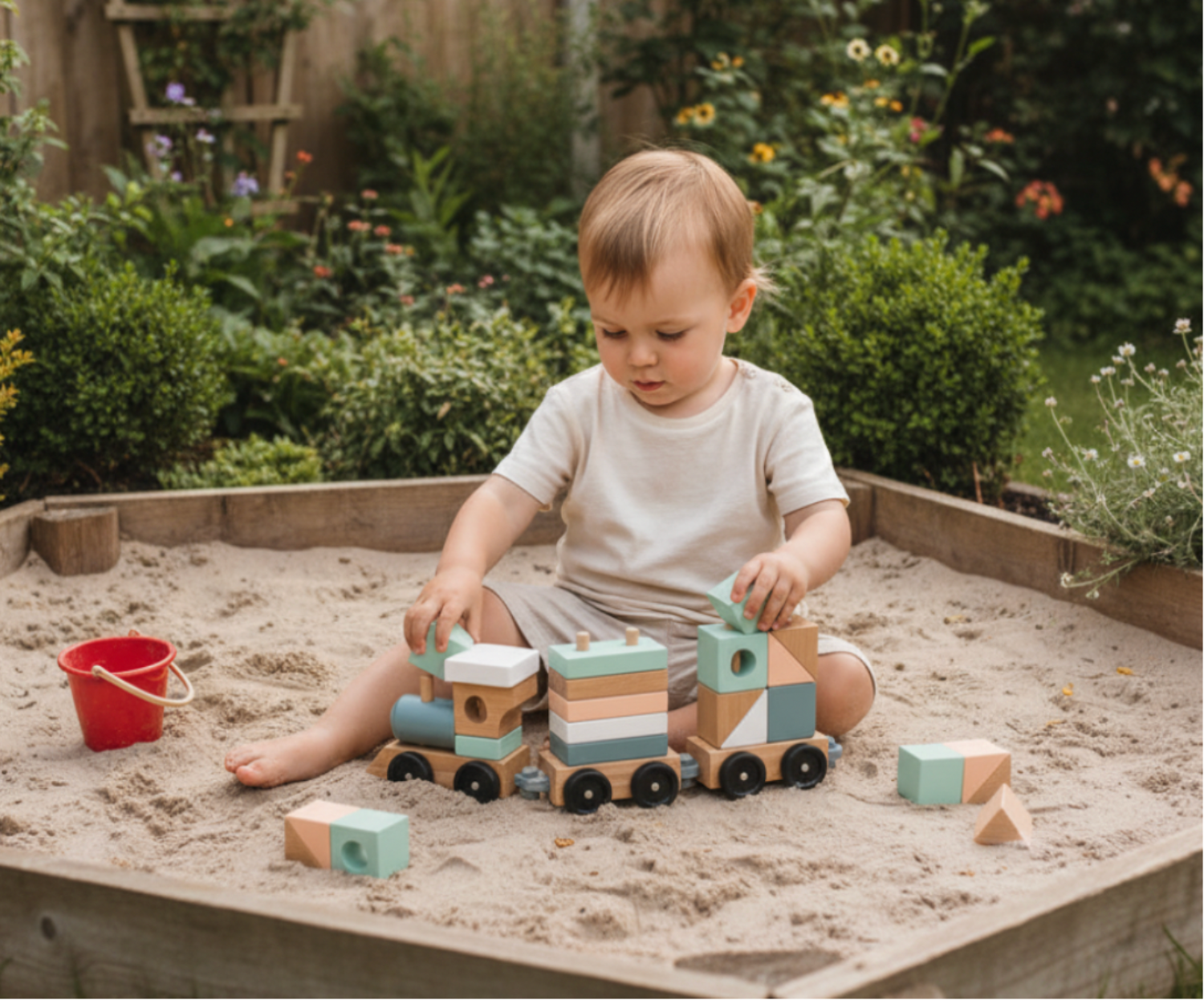
When children build, stack, arrange, carry, turn, place and create, they are doing far more than “just playing.” Their hands are learning how to work with the world. Fine motor skills develop as fingers grasp small objects. Coordination grows as movements become more deliberate. Even patience is practised as little hands try again when something topples over.

These small, ordinary actions are the foundations of confidence. Each movement is a quiet lesson in “I can do this.”
Imagination Builds Inner Worlds
Open-ended play gives children permission to imagine freely.
A simple object can become anything: a boat crossing a lake, a family gathered around a table, a tiny creature wandering through fields. When toys don’t tell children what to do, children learn to tell their own stories. They begin to shape inner worlds, build narratives, and practise empathy by imagining other lives, feelings and adventures.

This kind of imaginative play strengthens creativity, emotional intelligence and problem-solving in ways that structured, outcome-driven play cannot.
The Power of Boredom
Boredom is often treated as something to fix.
But boredom is where imagination quietly wakes up. When children are not constantly entertained, their minds begin to wander. They invent games. They arrange objects into patterns. They create stories where none existed before. In these moments, children learn to be comfortable with stillness and to generate their own joy.

Allowing space for boredom is, in many ways, allowing space for creativity to bloom.
Creating Space for Gentle Play at Home
Encouraging hands-on, imaginative play doesn’t require a playroom filled with toys. Often, less does more. A small collection of well-loved, open-ended pieces invites deeper engagement than shelves of novelty items.
Natural materials, simple forms, soft textures and objects that can be used in many ways tend to stay in children’s hands longer. They don’t overwhelm. They invite curiosity. They quietly become part of everyday rituals — play on the floor, scenes built beside the bed, stories carried from room to room.

Creating small, inviting spaces for play within the home sends a gentle message: your play belongs here.
Play Is Where Childhood Lives
Play is not a distraction from learning.
It is how children learn.
Through their hands, children discover the world. Through imagination, they discover themselves. In these slow, unstructured moments, children practise being human — exploring, wondering, creating, and finding comfort in their own inner worlds.

Perhaps the greatest gift we can offer is not more stimulation, but more space.
More time.
More quiet invitations to play.

Because childhood doesn’t need to be hurried.
It only needs to be held gently.